Catalog model
Collections, variants, options, stock and pricing rules worked out before design.
E-commerce
An online store is a machine with a lot of moving parts: catalog, variants, stock, payments, shipping rules, tax, email, fulfilment. Most of our store work is making those parts fit the way a particular business actually sells.
The problem
We build on Shopify when selling is the main job and you want checkout, payments and compliance handled for you. We build on WooCommerce when the store sits inside a content-heavy WordPress site or needs rules Shopify will not allow. We build custom when the catalog genuinely does not fit either.
Shoppers want delivery dates, sizes, what is in the box and what happens if it is wrong. Most pages give them a paragraph of brand story instead.
Weight bands, regional restrictions, cold-chain windows, pick-up options. When they are bolted on late, carts fail or you eat the cost.
A theme is built to show every feature at once. With real products and real photography it needs design work the demo hid.
If the owner cannot add a line, update stock and run a discount without help, the store stalls the first busy week.
Our answer
We start with the catalog and the rules, not the homepage. How products are grouped, what varies, how stock moves, how things ship and where. Getting that model right is most of the work and it is invisible when done well.
Then we design the pages that carry the sale: collection pages that narrow quickly, product pages that answer the real questions, a cart that shows the total and the delivery date, and a checkout we leave alone unless there is a specific reason to touch it.
We configure payments, shipping and tax, load the products, connect email for abandoned carts and order updates, add product schema so Google shows prices and stock in results, and tune speed on the pages that matter.
What is included
Collections, variants, options, stock and pricing rules worked out before design.
Custom homepage, collection and product page design matched to your brand, not the theme demo.
Gateway connected, shipping zones and rules configured, tax set up for where you sell.
Products, variants, images and descriptions entered and checked, up to the package limit.
Order confirmations, shipping updates, abandoned-cart recovery and discount codes.
Product schema, image optimization and speed tuning on collection and product pages.
How it runs
We work through products, options, stock and shipping with you until the model is right.
Collection, product, cart and checkout flows designed around how your customers buy.
Theme build, integrations, product loading, payment and shipping setup, test orders end to end.
Go live, monitor the first orders, fix what surfaces, hand over the admin with training.
 E-commerce
A direct-to-consumer eyewear store on Shopify, with collection pages built around frame shape and fit so shoppers can narrow a large catalog quickly.
 E-commerce
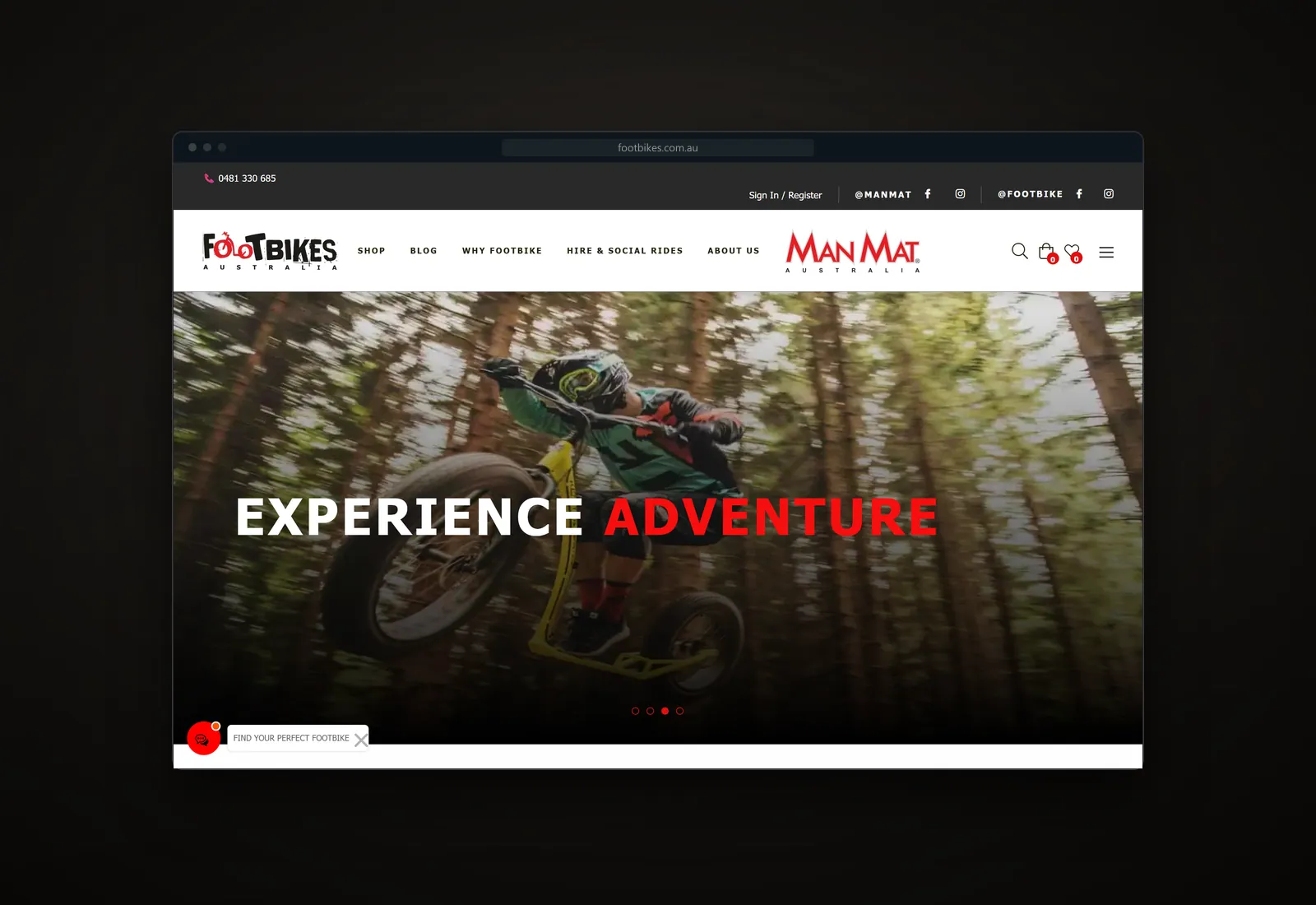
A Shopify store with a Vue product configurator, so customers see exactly the footbike they are ordering before they commit.
 E-commerce
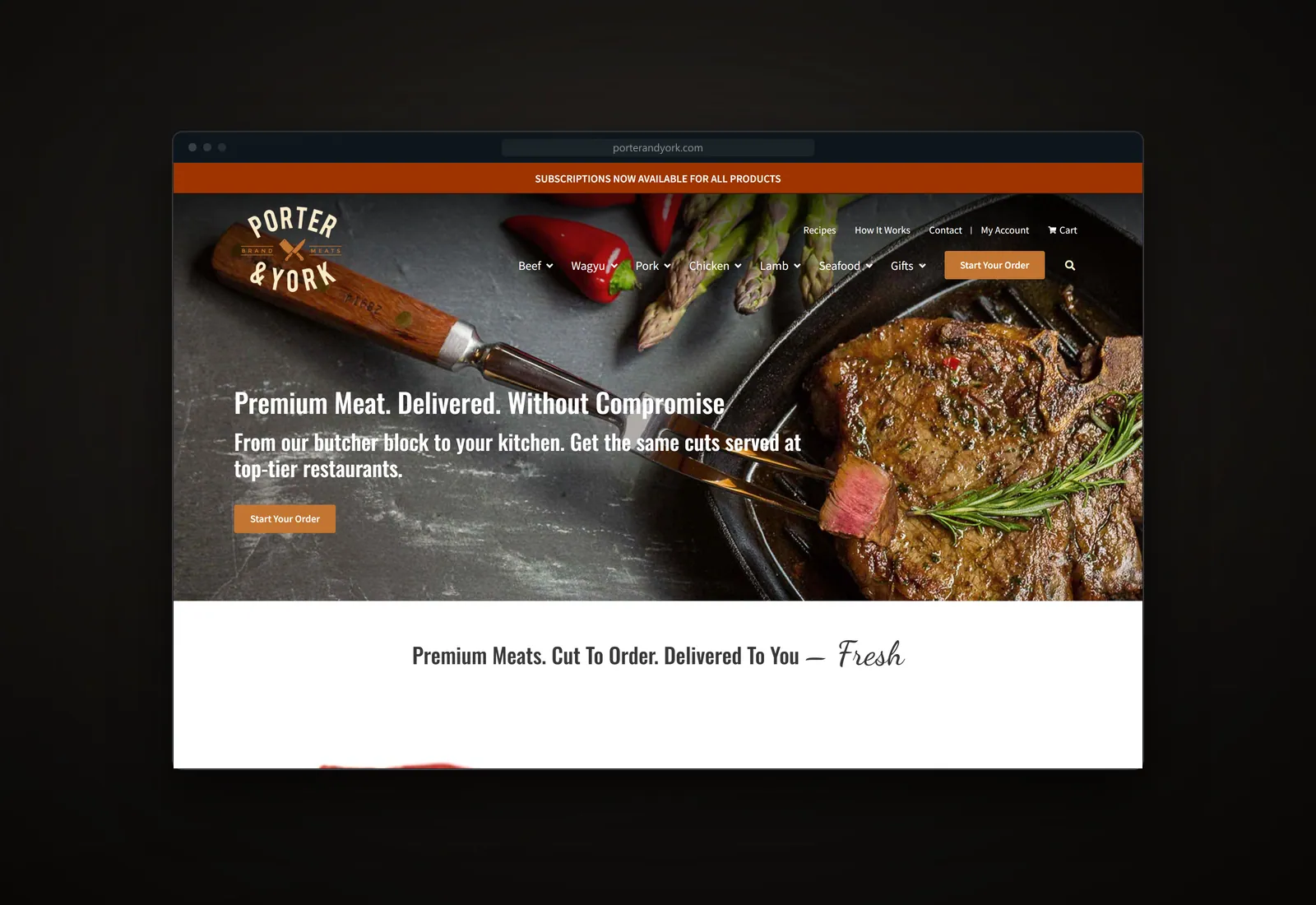
A WooCommerce store for a fresh meat supplier, handling cut sizes, cold-chain shipping windows and an admin side a warehouse team can run.
Questions
Related services
A short brief, a fixed price in writing and a realistic date range. No sales call unless you ask for one.